Blog
48V vs 220V Track Lighting: Why Low Voltage Wins for Modern Homes

If you are planning a renovation, you have probably faced a quiet but important decision: should your track lighting run on mains voltage (220V) or on a low voltage, safe voltage system? It is not just a technical detail. The voltage you choose shapes how safe the installation is, how freely you can rearrange fixtures later, and how clean the final result looks.
At FLUXY, we build 48V track lighting systems for homes and commercial projects in 80+ countries and regions. In this guide, we compare low voltage lighting with traditional mains-powered tracks, so you can decide with confidence before the first cable is pulled.
What Does “48V” Actually Mean?
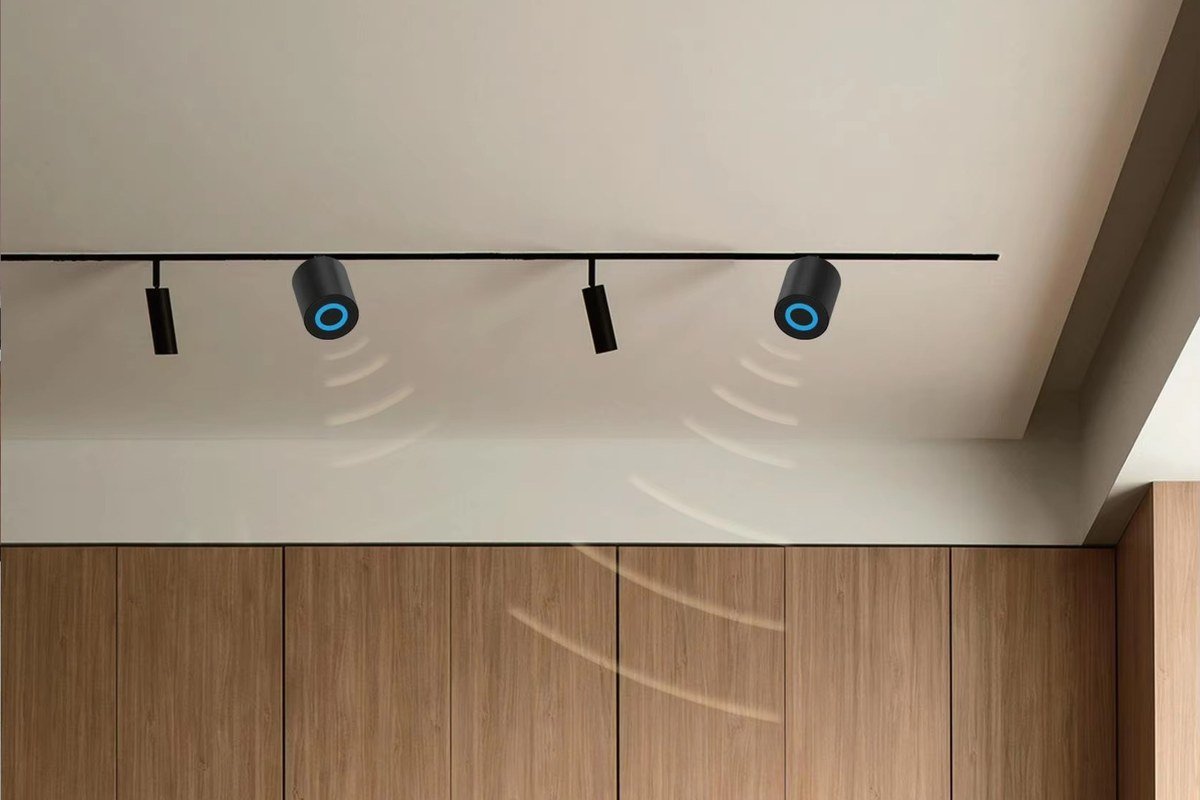
Mains voltage in most of Europe, Asia, and Australia is 220–240V AC. That is the same power that runs your washing machine and oven. A 48V system works differently: a transformer steps the mains down to DC48V, a safe voltage that feeds an energized track across the entire ceiling.
The practical difference is striking. On a FLUXY magnetic track, 48V is low enough that the live track can be touched safely. There is no shock risk while you snap a spotlight in or slide it to a new position — even while it is on. With a 220V track, every fixture change is electrical work that requires switching off the circuit and, in many regions, a licensed electrician.
Safety: The Case for Safe Voltage in Living Spaces
For family homes, safety is usually the deciding factor. Children, pets, and tall furniture all create opportunities for accidental contact with fixtures. A safe voltage track removes that worry entirely.
- Touch-safe energized track: at DC48V, the exposed rail carries no shock hazard, so repositioning lights is a one-handed, two-second task.
- Lower heat at the rail: reduced voltage means reduced risk at connection points, which matters in ceilings with insulation.
- Safer maintenance: homeowners can clean, swap, or upgrade fixtures without calling a professional.
For contractors, this also means fewer callbacks and a simpler compliance conversation during inspection. Our full range of tracks and accessories is engineered around this touch-safe 48V principle.
Installation Flexibility: Plug, Slide, Lock
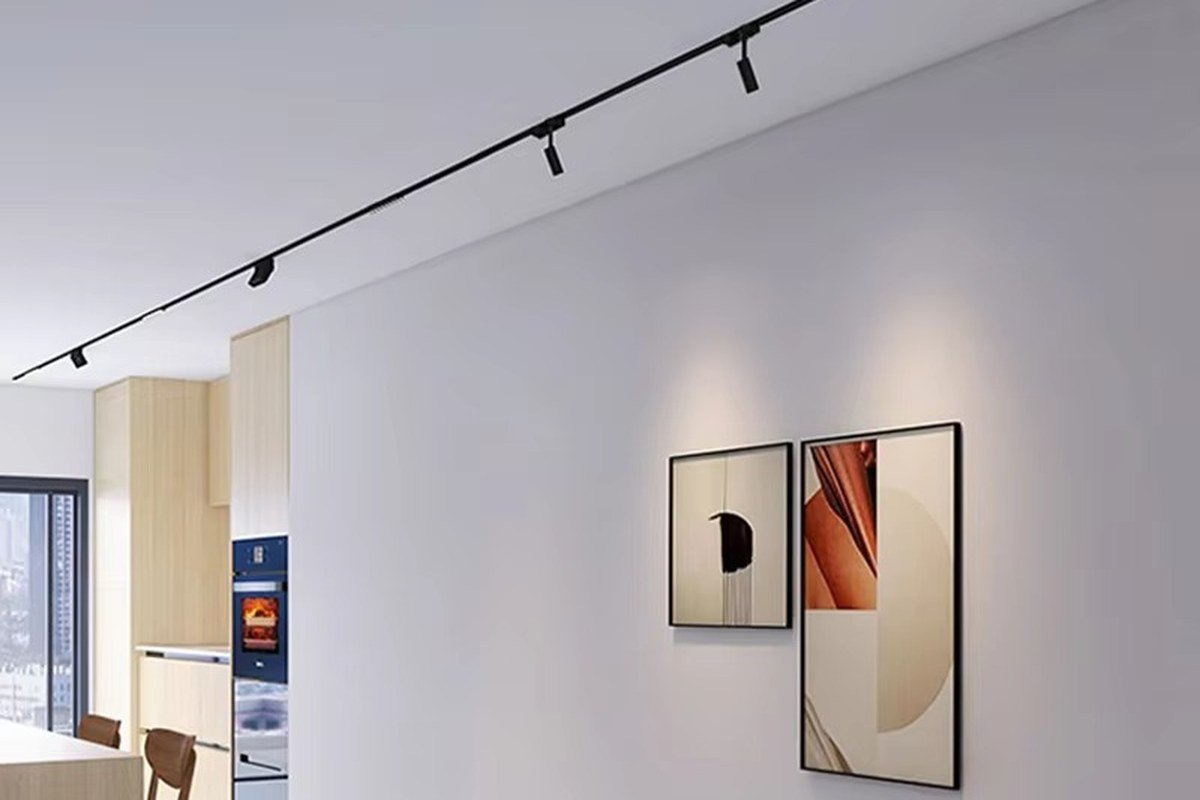
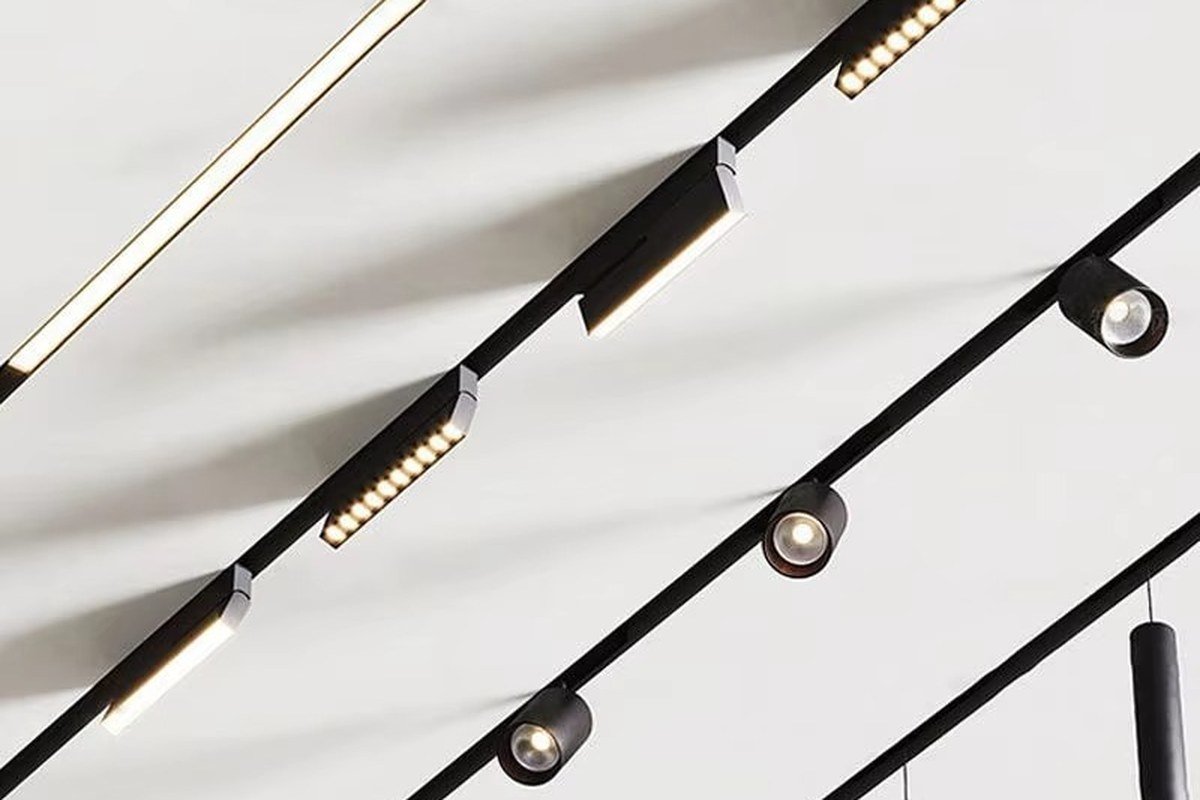
Low voltage lighting unlocks the magnetic advantage. Because the rail itself is safe, fixtures attach with magnets plus a mechanical locking clip — no screw terminals, no wire stripping, no tools. You can:
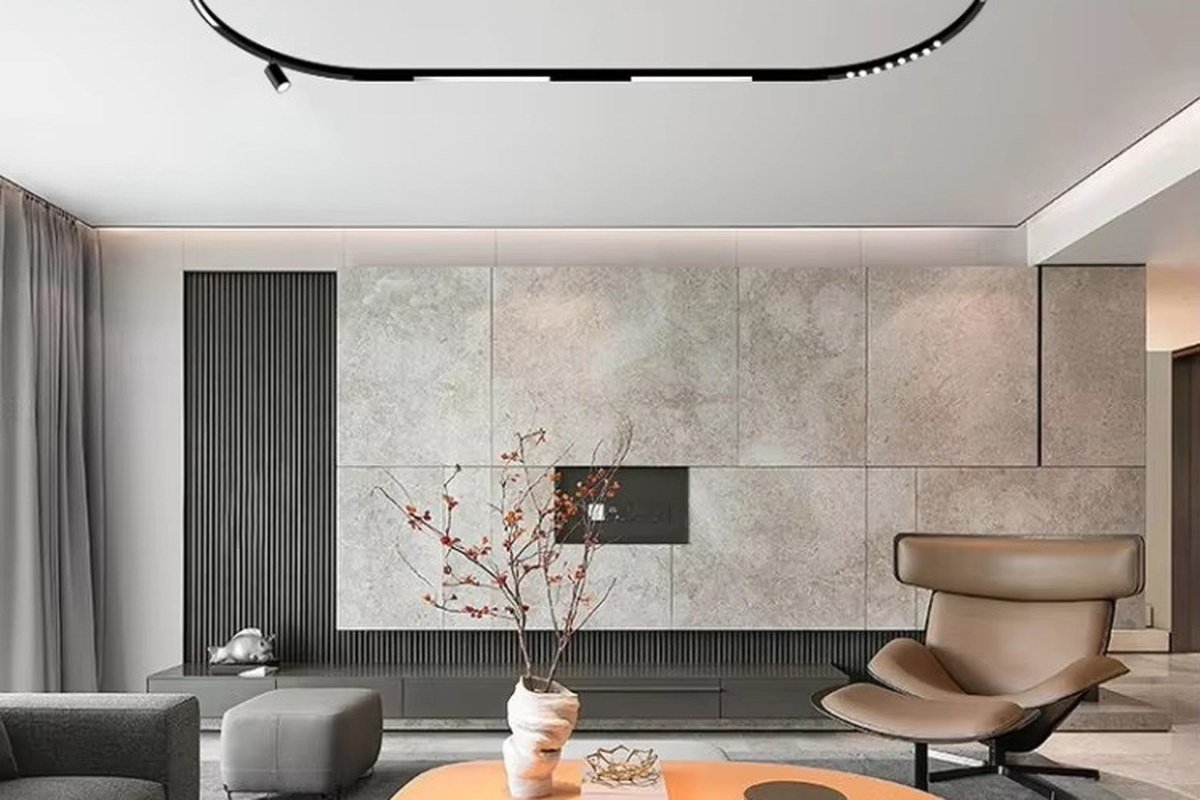
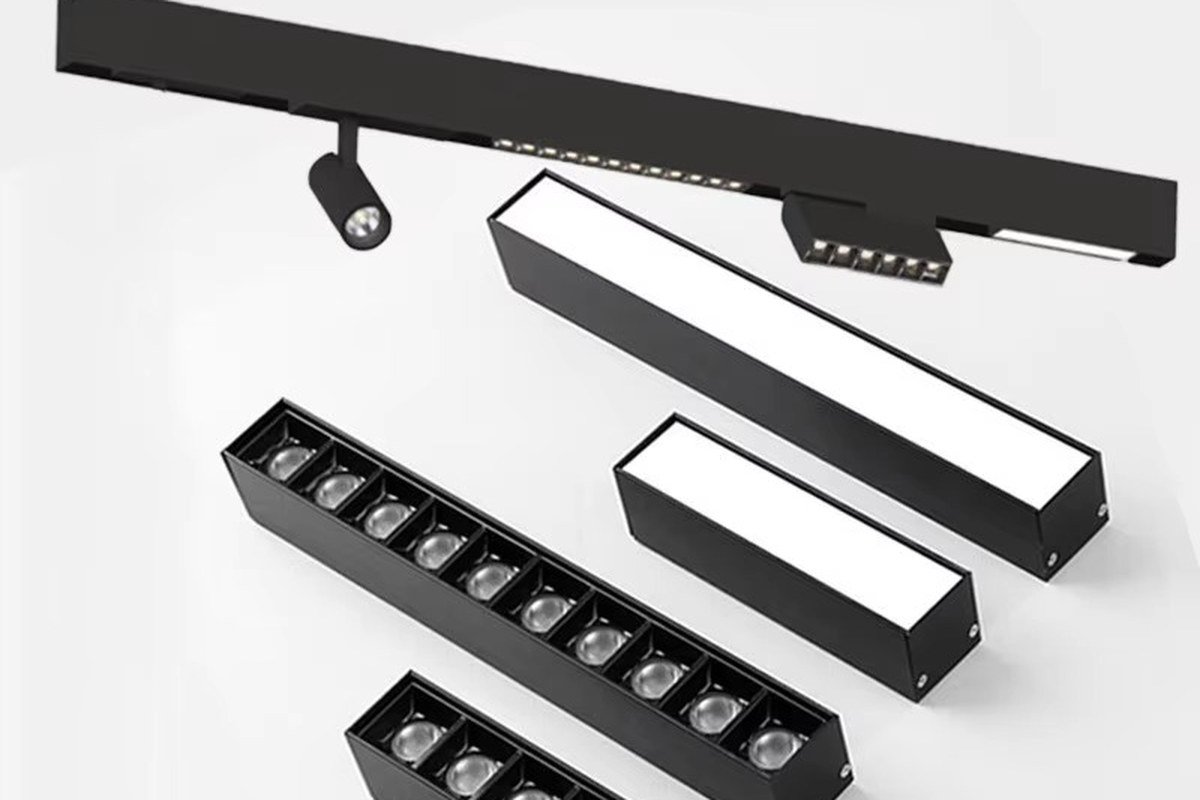
- Place a spotlight, grille light, or pendant anywhere along the track and slide it until the beam lands exactly where you want it.
- Change the layout in minutes when furniture moves — no rewiring, no new holes.
- Swap fixture types later: add a 6mm ultra-slim magnetic track system in the bedroom while keeping the same 48V ecosystem.
Power is just as tidy. FLUXY’s built-in 100W and 200W transformers insert directly into the track — no access panel, no maintenance hatch — and can be unplugged and replaced if your load ever grows. Larger installations simply use an external power supply.
Performance: Does Low Voltage Mean Dim Light?
No — this is the most common misconception. Voltage is not brightness. Our fixtures use OSRAM chips with high color rendering (Ra≥90 across most series, and Ra≥95 on our 6mm ST1, round, and plaster ranges), delivering clean, accurate light at 3000K, 4000K, or 6000K. Smart versions tune smoothly from 3000K to 6000K via Tuya Zigbee.
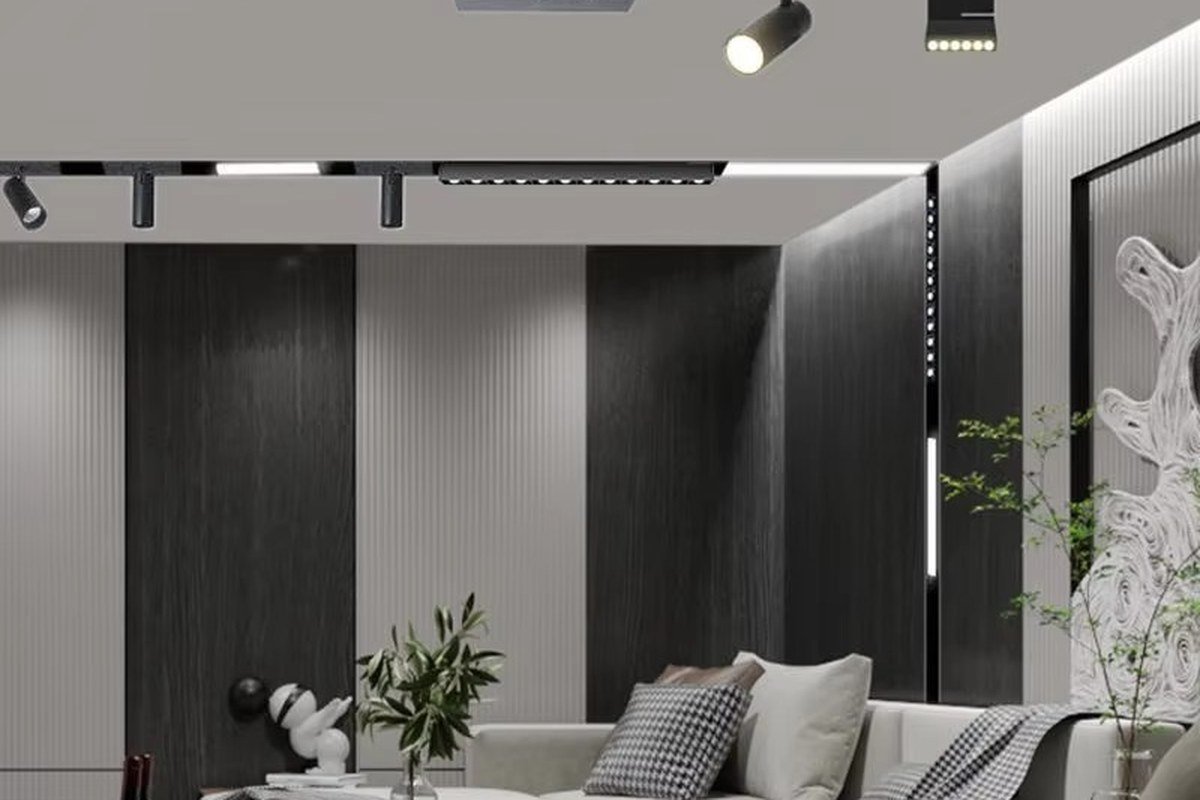
Where the two approaches genuinely differ is flexibility at the fixture level. Mains-voltage track heads must each contain their own driver and heat management, which makes them bulkier. A 48V fixture can be compact — our 6mm track, for example, is just 6mm thick and 26mm wide — thinner than three coins — and mounts surface-style with no grooving and no plastering, fixed by screws and locating plugs. Slim tracks disappear into the ceiling line; bulky mains heads sit on top of it.
Cost: Upfront vs. Lifetime
A mains-voltage track can look cheaper on day one — one less component. But low voltage systems typically win over the life of the installation:
- No electrician for layout changes: rearranging fixtures costs zero labor.
- Upgradable by design: replace individual lights, not the whole system.
- One centralized power point: a single transformer feeds long runs, simplifying wiring.
Every FLUXY system is backed by a 3-year warranty, and because fixtures are interchangeable, a single spare covers many positions.
Conclusion
For modern homes, 48V track lighting beats mains voltage on the things that matter most: safety (a touch-safe, live track), flexibility (magnetic fixtures that plug, slide, and lock anywhere), and clean design (tracks as slim as 6mm). Mains-powered tracks still have their place in industrial settings, but for living rooms, bedrooms, kitchens, and retail spaces, low voltage lighting is the smarter foundation.
Ready to plan your project? Send us your floor plan and our lighting team will create a free layout and product list.