
Blog
How to Choose a 48V Transformer for Your Magnetic Track System

You have picked the track, chosen your spotlights, grilles and pendants, and now the project stalls on one deceptively simple question: which 48V transformer do I actually need? Get this wrong and the symptoms show up fast — flickering at the far end of the run, a warm transformer that fails within months. An undersized magnetic track power supply is the most common reason a beautiful lighting layout underperforms.
The good news: sizing a 48V transformer is simple math, not guesswork. This guide covers the calculation, built-in versus external units, and the exceptions that trip up even experienced installers.
Why Your Magnetic Track Runs on 48V in the First Place
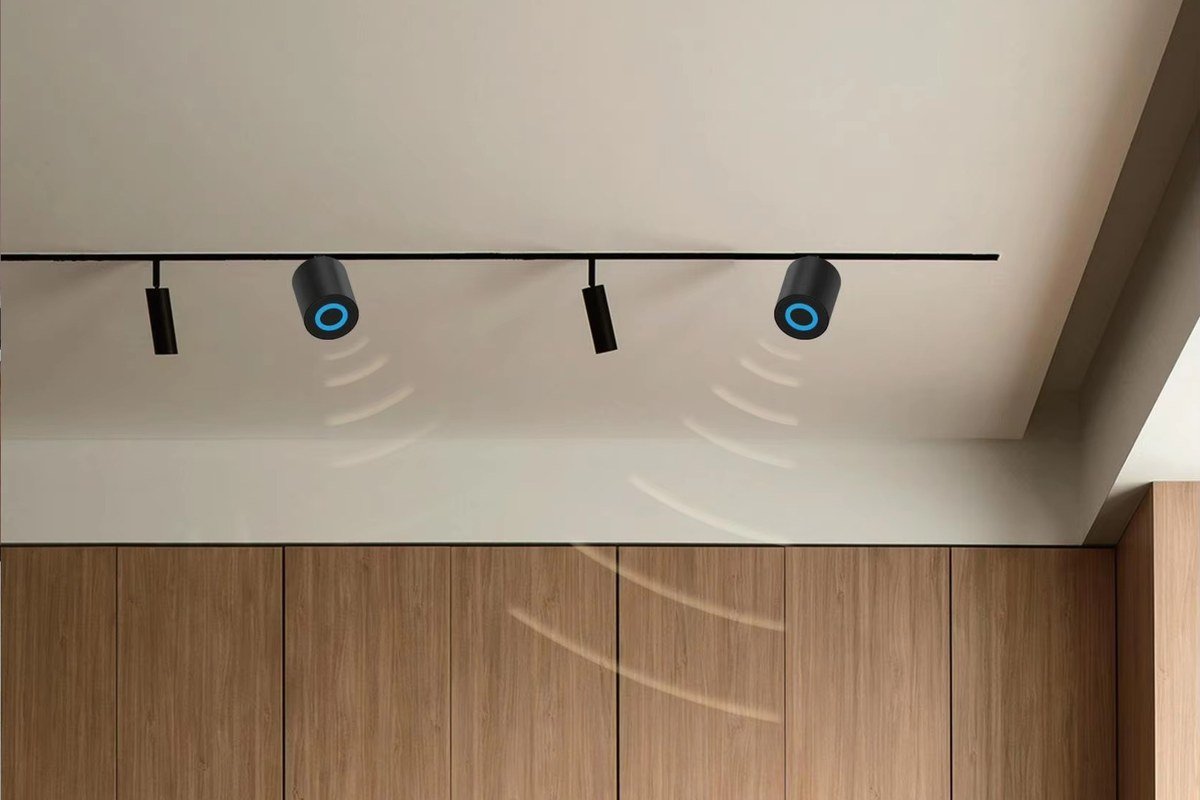
FLUXY magnetic track systems operate on DC48V — a safe low voltage that remains touchable even when the track is powered on. That is what makes the plug-and-play architecture possible: you can slide a spotlight to a new position or snap in a pendant anywhere along the rail without switching off the circuit. The 48V transformer bridges your mains wiring and that low-voltage track — and it must feed every lamp on the run without running at its limit.
Step One: Add Up the Real Load of Your Luminaires
Every lamp on the track draws power, and the transformer must cover the total. Sum the wattages of everything in your layout:
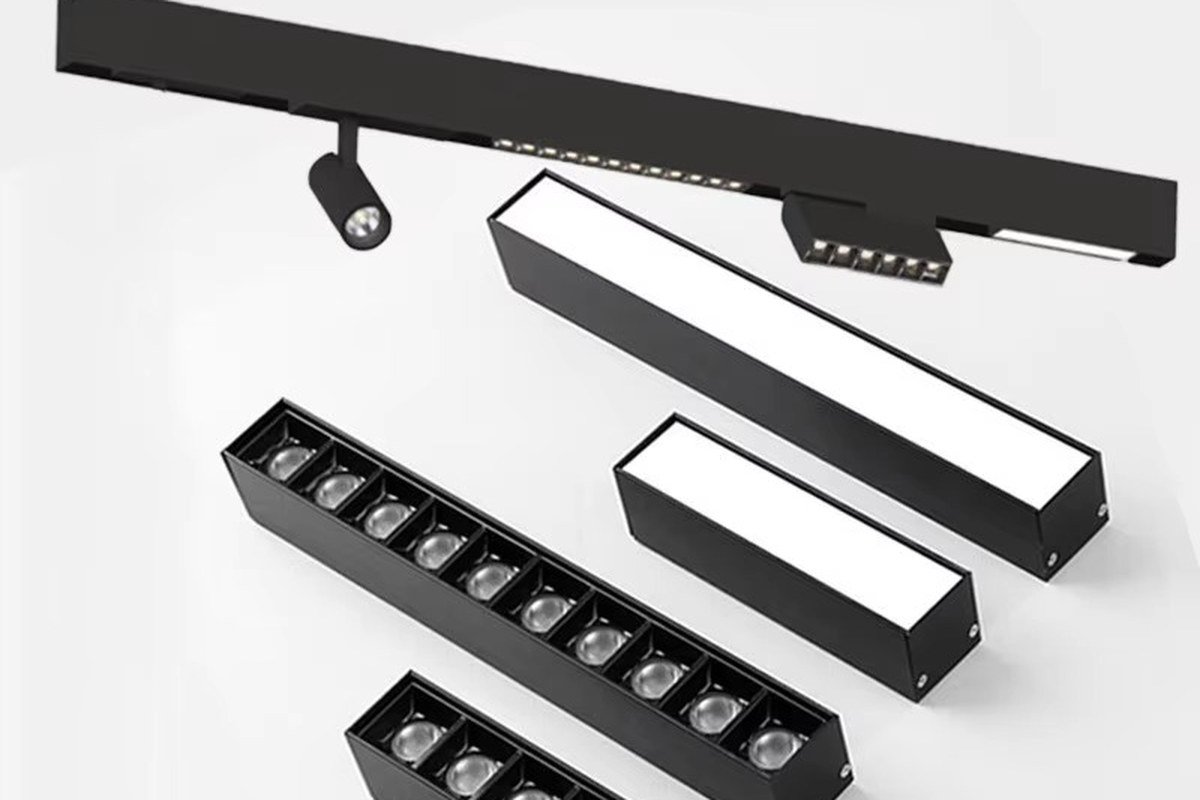
- Spotlights: 7W–20W each
- Grille lights: 6W–24W
- Flood lights: 10W–30W
- Pendant lamps: 6W–12W each
Worked example: a living-room run with four 10W spotlights, two 12W grilles and one 20W flood light adds up to 84W. The transformer must comfortably exceed that — “comfortably” being the part most people skip.
Step Two: Apply the 20% Headroom Rule
An LED driver running at full capacity generates heat, shortens its own lifespan and leaves no margin for chip-to-chip wattage variation. Add at least 20% headroom above your calculated load.
- Load up to ~80W → 100W transformer
- Load up to ~165W → 200W transformer
- Load above 165W → split the run between multiple transformers, or move to an external power supply
Going back to our 84W example: 84W × 1.2 = 100.8W, so a 100W unit is borderline and a 200W unit is the future-proof choice. If you plan to add lamps later — and plug-and-play tracks make that almost inevitable — size for the layout you might want, not just the one you have.
Built-In vs. External: Which 48V Transformer Should You Use?
Built-in transformers (100W / 200W) insert directly into the track like any other module: no inspection port, no junction-box clutter, and if one ever fails you unplug it and snap in a replacement — maintenance in under a minute. For most residential projects, built-in units are the cleanest solution. You can find them alongside our rails and power modules in Tracks & Accessories.
External power supplies (200W / 350W) sit out of sight — above the ceiling or in a service void — and feed the track through a power connector. Choose external when the load exceeds what a built-in unit can carry, or when future service access is easier outside the ceiling plane. Check the input voltage before ordering: some series accept a wide 85–264V input, others are rated 220–240V.
Know Your Exceptions Before You Order
Two FLUXY product lines break the 48V rule, and pairing them with the wrong power supply will not work — or worse, will damage the lamps:
- The UN5 ultra-narrow 5mm series runs on DC24V, not 48V. Its dedicated 24V power supplies are not interchangeable with 48V units.
- Zoom adjustable-focus track lights connect directly to mains power (AC85–265V) on conventional 2/3-wire track. They need no transformer at all and sit outside the magnetic 48V ecosystem.
Every other magnetic track family — 6mm ultra-slim, 20mm, 35mm wide-slot, 15mm narrow, golden and circular — runs on DC48V.
A Few Final Checks for a Trouble-Free Installation
- Never exceed the rated load. Overloading causes most flicker and premature failure complaints.
- Count your power feed points. Long or branched runs may need more than one feed point to keep voltage stable.
- Match input voltage to your market. Check the input rating on the unit (85–264V wide-input versus 220–240V) before installation.
- Leave room to grow. Size the magnetic track power supply for one or two lamps more than you need — magnetic layouts change in seconds.
Conclusion
Choosing a 48V transformer comes down to three numbers: total lamp wattage, plus 20% headroom, matched to a built-in or external unit that fits your load and ceiling. Respect the 24V and mains-voltage exceptions, and your system will run silently and reliably — backed by FLUXY’s 3-year warranty.
Ready to plan your project? Send us your floor plan and our lighting team will create a free layout and product list — including the correctly sized power supply for every run. Browse our tracks and transformer collection for the full range of DC48V rails, built-in drivers and accessories.